Renaturation refers to the restoration of ecosystems to a near-natural state. For raised bogs, this means the reintroduction of typical raised bog plants, the creation of nutrient-poor conditions as well as open and extensive site conditions and the restoration of hydrological characteristics (source: LBEG, 2022). By the way, scientists prefer to talk about restoring ecosystems, as a state completely back to nature cannot be achieved.
What does peatland restoration look like?
- Selection of the area
First, of course, a suitable surface must be selected. Of the original 1.5 million hectares of peatland in Germany, 95% has been drained and only around 6% of the peatlands are now designated as nature conservation areas (Natura 2000 protected areas) (Mooratlas, 2023).
One of our peatland areas is located in the Totes Moor near Steinhuder Meer. The Tote Moor is part of the Hannoversche Moorgeest in Lower Saxony and extends over around 33 km², bordering the towns of Neustadt am Rübenberge and Eilvese as well as the Steinhuder Meer. It is a partially peat-covered raised bog with some areas of fen. The first peat extraction began in the 18th century and continued on an industrial scale in the 20th century, although parts of the moor are now a nature reserve.
- Water management
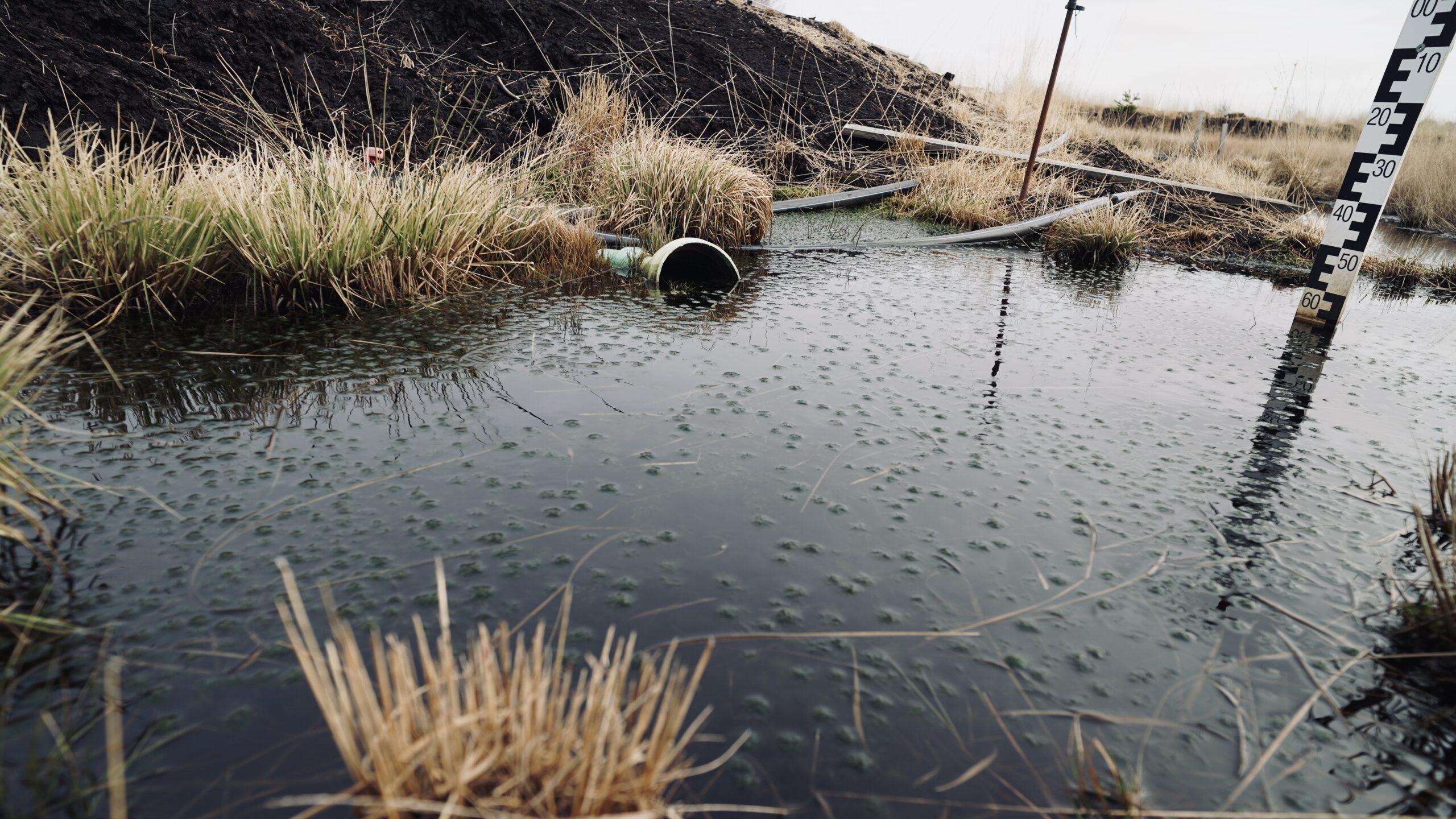
Water management is crucial to rewetting peatland and allowing the mosses to grow optimally. To do this, old drainage systems must be removed to stop the drainage for the time being, and irrigation pipes must be installed to distribute the water between the individual areas, also known as polders.
A large water retention basin was also created in the Totes Moor area to protect the peatland from drying out in dry summers and to supply it with water. The pool also has a cooling effect on the environment and filters nutrient-rich water so that it can be used for the peat mosses. The installation of a solar-powered pump should enable active water management. The levelling of the areas (grading), the establishment of polders and active water management are therefore crucial for the safe establishment of peat mosses.
- Vegetation development
After initial renovation measures have been carried out, natural self-greening often takes place. The seeds stored in the peat body are then randomly dispersed by the wind. However, if a specific peatland ecosystem is to be restored, the desired plants must be actively introduced to the area. These are mainly peat mosses. The spreading of peat moss is also known as inoculation. This approach is very time-consuming and labor-intensive, but it ensures that the ecosystem has a better chance of recovering. It also promotes the restoration of a desirable diversity of plant and animal species. This gives the desired, less competitive peat mosses a small starting signal for successful establishment and ensures that unwanted plants are pushed back. Excessive growth of rushes and sedges, for example, leads to higher nutrient levels in the soil, which restrict the growth of peat mosses. A “simple return to nature” is therefore not that easy.
For the cultivation of peat moss, the Steinhuder Meer Ecological Protection Station is working on cultivating various peat moss species on long cultivation tables for nature conservation purposes. In the future, however, there are also plans to cultivate peat moss in a greenhouse over a large area.
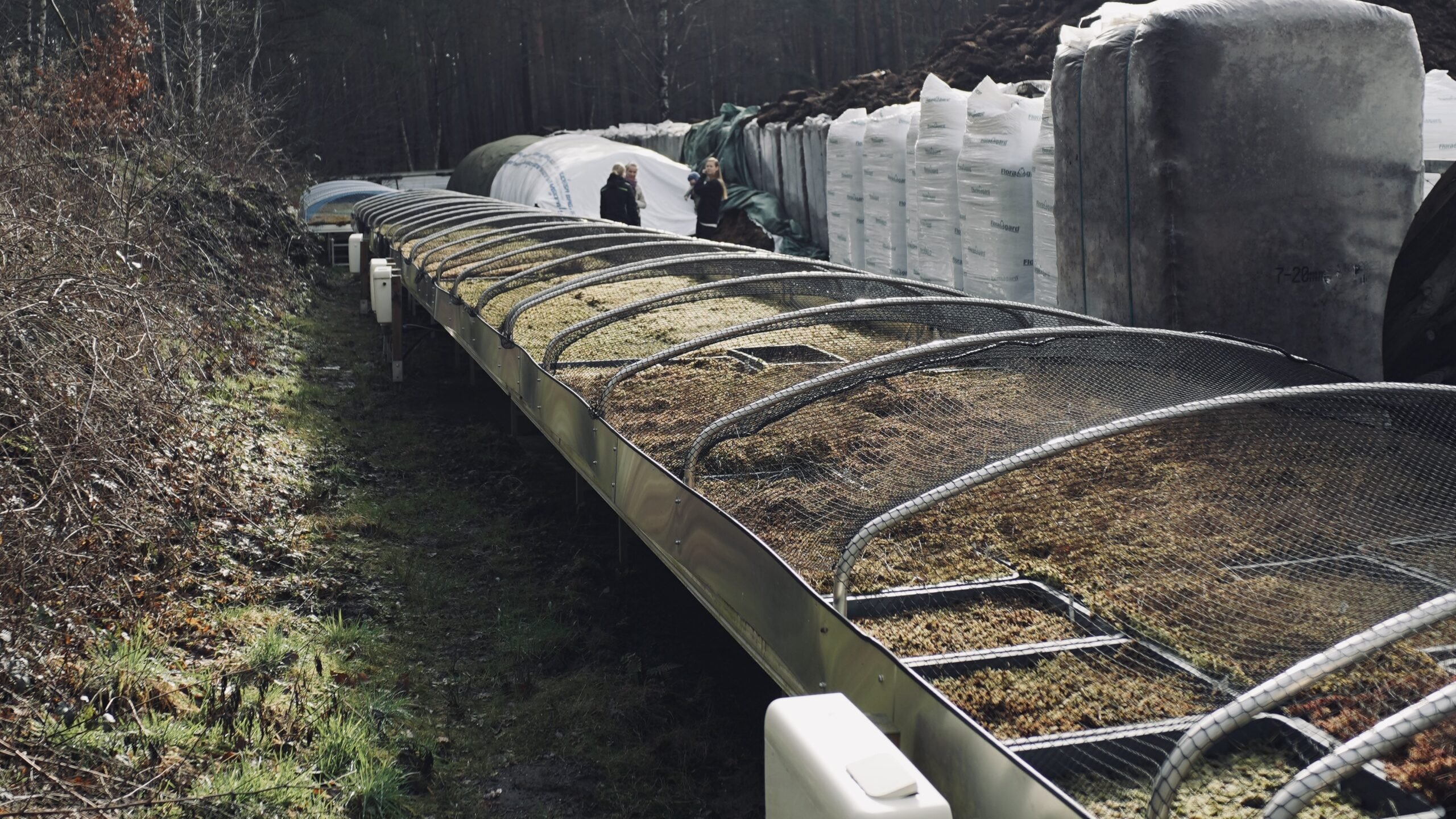
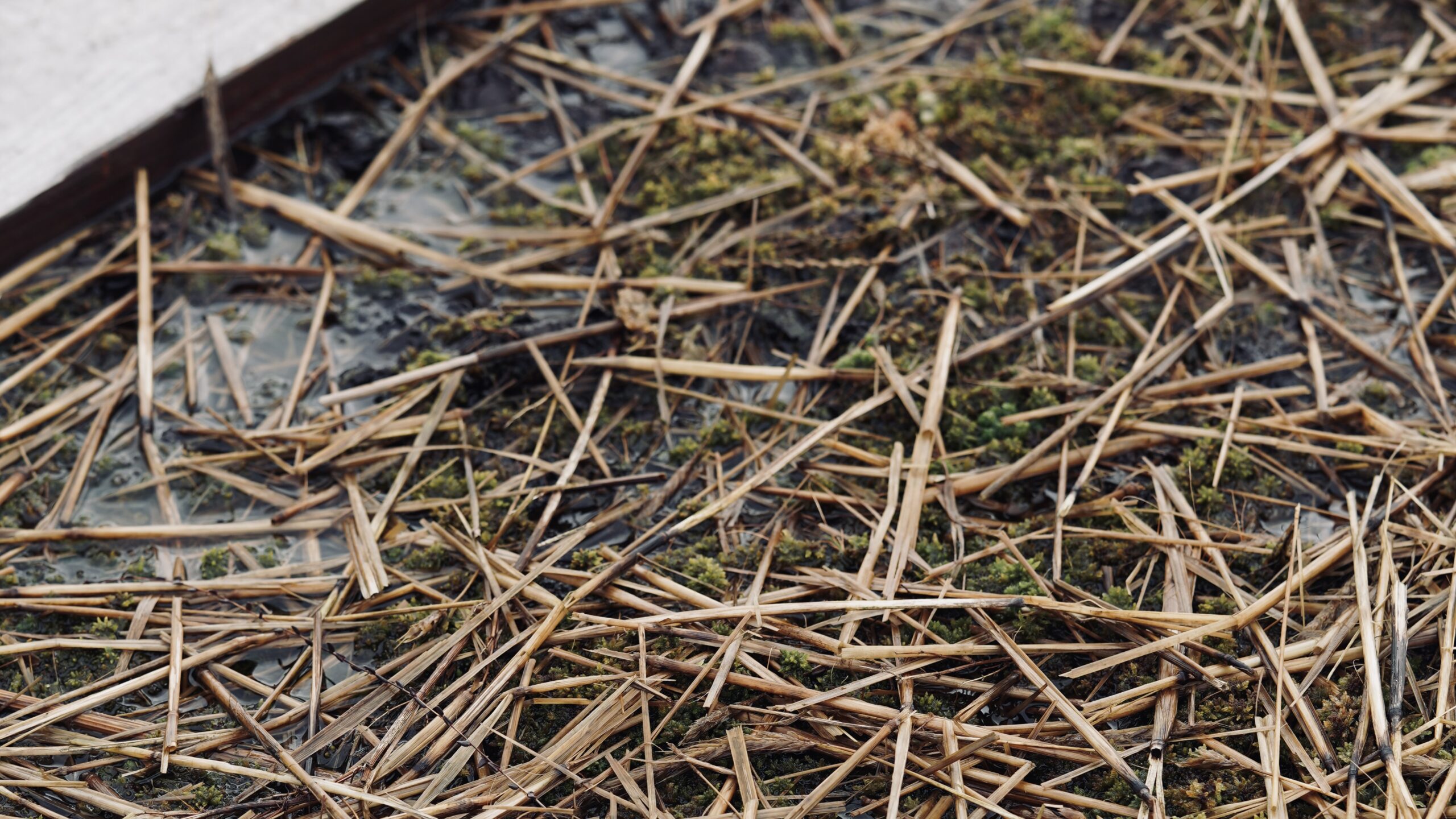
Peat mosses need high water levels of at least 30 cm below the soil surface in order to grow optimally. As mosses can only survive short phases of flooding at the beginning of the restoration, the regulation of the water level is crucial for the successful establishment of a moss carpet. In the initial phase, peat mosses are often covered with straw during local propagation in the field. Of course, this would not be necessary in nature, but it is particularly important for growing peat mosses to protect them from drying out and sunlight. Otherwise they would “burn” due to the high evaporation.
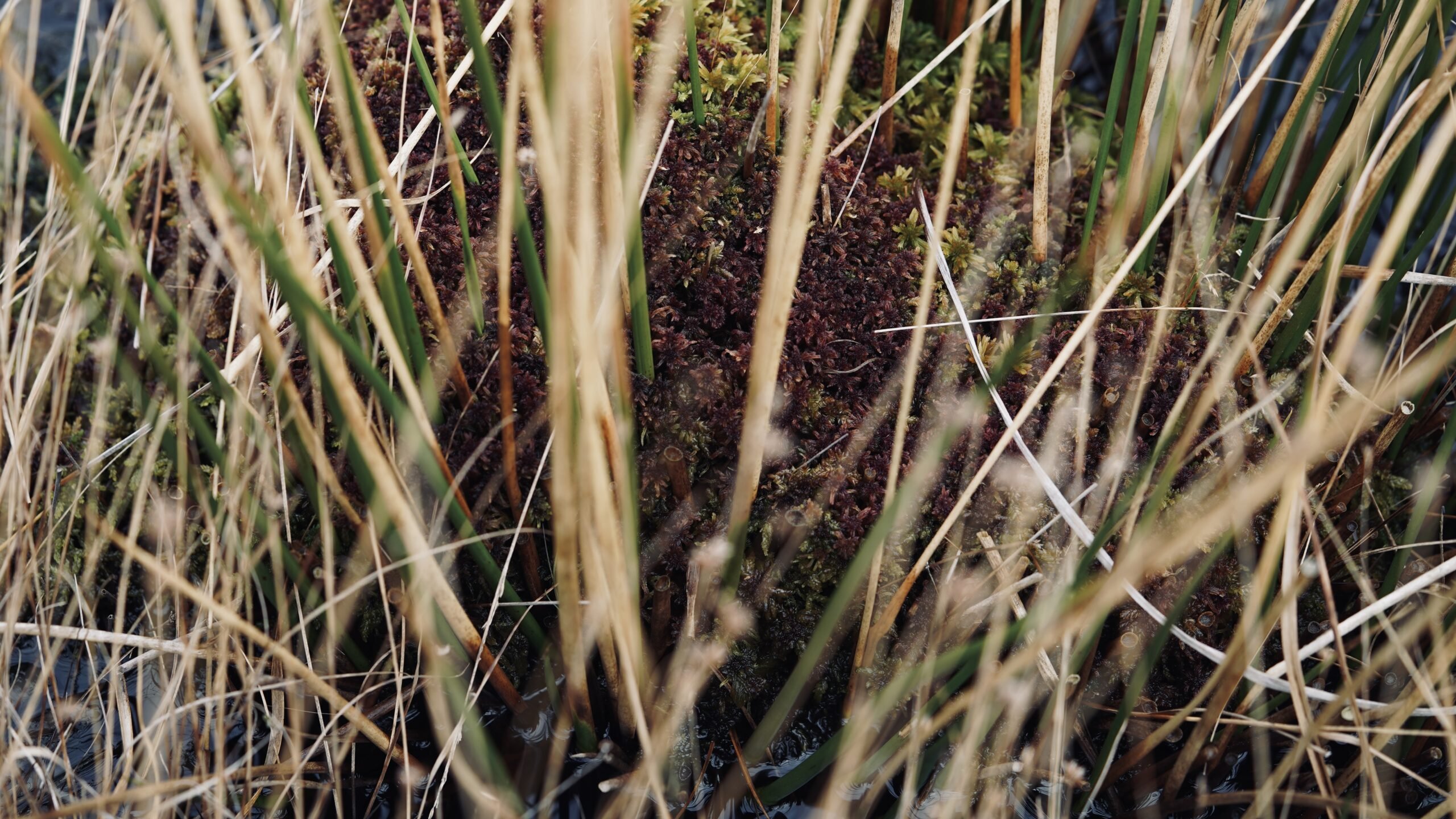
Moss growth follows a series of different succession stages. Sphagnum cuspidatum is the first to settle on the edges of still surface waters, gradually closing the waterholes. In the water they can almost be mistaken for algae. However, the striking shape and color of the small pioneers can be seen at the edges. Particularly where rushes and sedges protrude from the water and stop the water movement, optimal conditions are created for further moss growth. Under optimal conditions, peat mosses grow up to 8 cm per year above ground. A special feature of mosses is that they never stop growing, but the lower part slowly dies in the absence of oxygen in the water and forms peat, while the upper part continues to grow.
- Maintenance measures
Regular maintenance measures, such as mowing or grazing, are essential for the long-term preservation of a moor. Another important way of combating the symptoms of low water levels is to remove the weeds. This means that invasive species, i.e. undesirable plants such as birch and other trees, must be removed. Because trees extract water from the peatland and without water there is no peatland – quite simply!
This peatland restoration project of the ÖSSM (Ökologische Schutzstation Steinhuder Meer), which we have been supporting for two years, clearly shows that wetland restoration works, but also requires investment. That is why we continue to welcome support and donations to continue our mission.