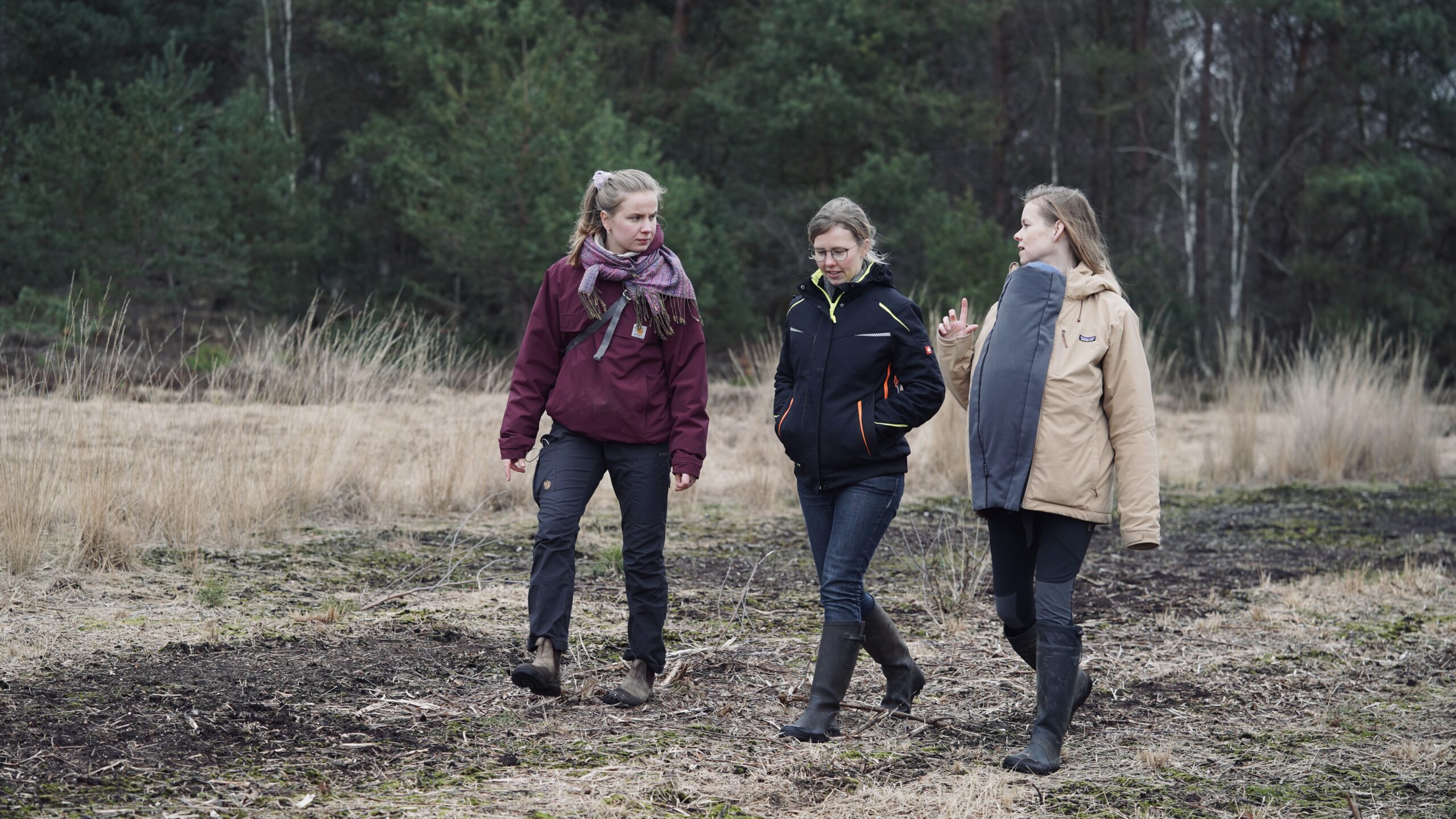

Members of the Bundestag Britta Haßelmann and Niklas Wagener reached out to us at Mission to Marsh. They wanted to engage in a dialogue with us and see firsthand how bog conservation is carried out on the ground. Since our executive director, Ann Christin, is already working on her doctoral dissertation on this very topic as part of the MOOSland project, we decided to team up right away. The idea: We’d bring politicians straight from the plenary chamber to the Barver Moor in Lower Saxony to visit a paludiculture test site.
But wait a minute—Paludi-what?
If you’re not familiar with the term yet: paludiculture (from the Latin “palus,” meaning “swamp”) simply refers to agriculture and forestry on wet or rewetted peatlands. Why is this such a game-changer? Until now, agriculture has deeply drained bogs—causing the peat to oxidize when exposed to air and resulting in significant CO₂ emissions.
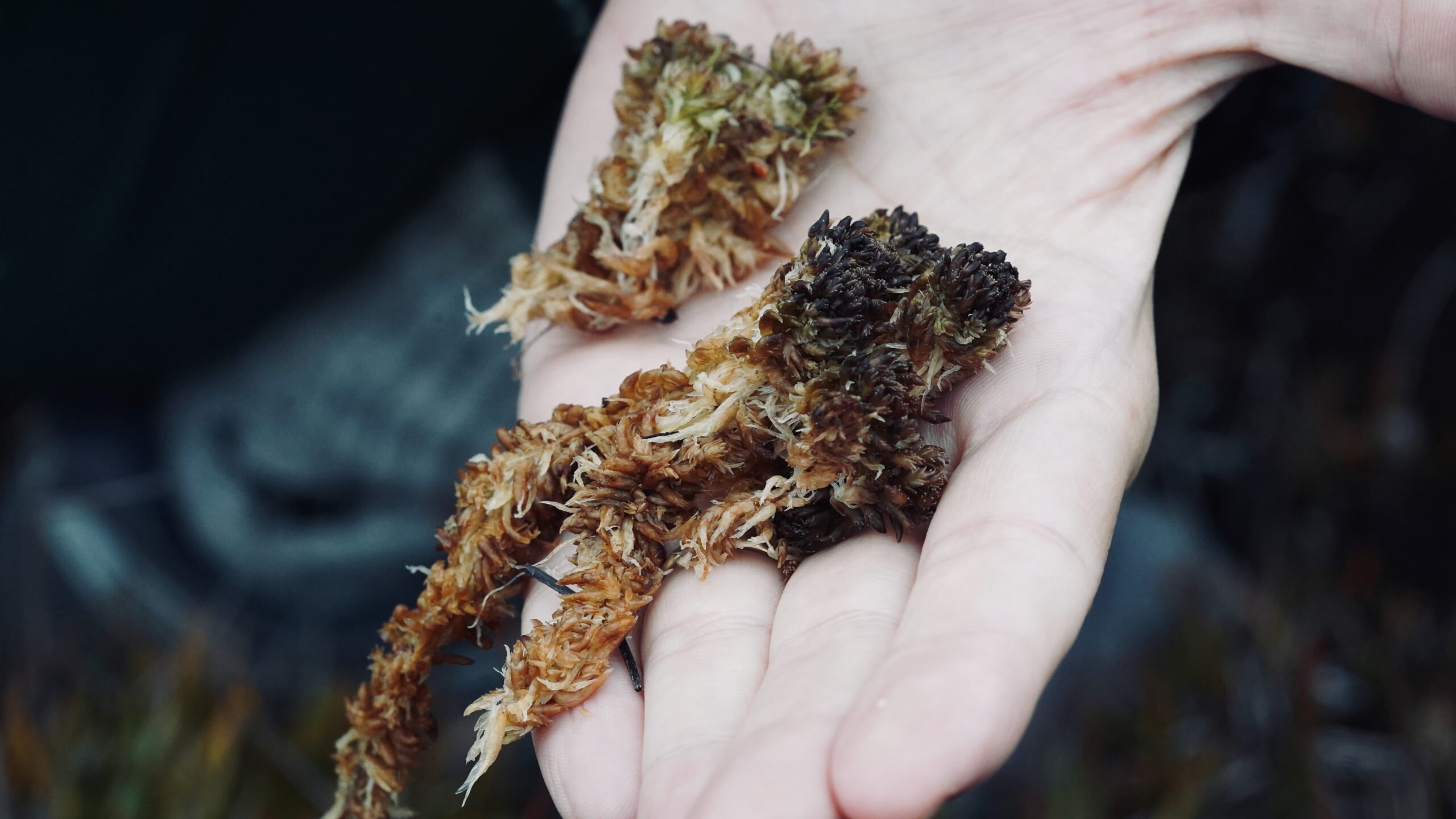
If we stop drainage and rewet the wetlands, we’ll solve the problem at its root: Wet wetlands no longer release CO₂ and regain their superpower to store carbon over the long term. And this is exactly where paludiculture comes into play: Instead of growing crops that need dry soil, we plant species that love wet conditions! These can include reeds, cattails, or even our beloved sphagnum moss. The brilliant thing about this is that it revitalizes the bog and preserves all its superpowers! It once again stores enormous amounts of carbon, soaking up water like a giant sponge that holds moisture in the landscape, thereby protecting us from droughts. The water is filtered, and the nutrients it contains help the plants grow. And the bog once again provides a habitat for rare, endangered species. At the same time, however, farmers can continue to use the land. So it’s a true win-win situation that helps secure our future.
Experience the Superheroes Up Close
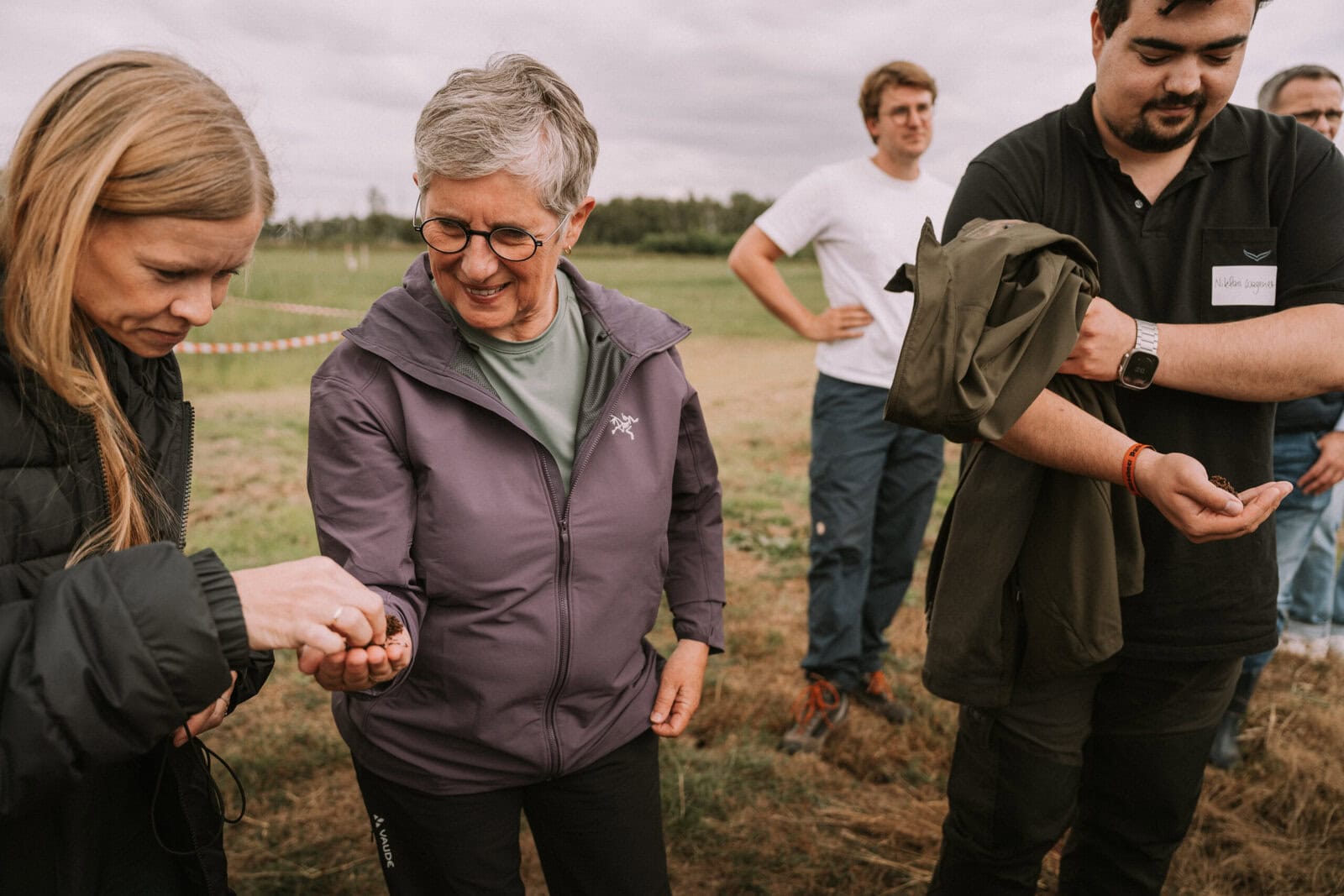
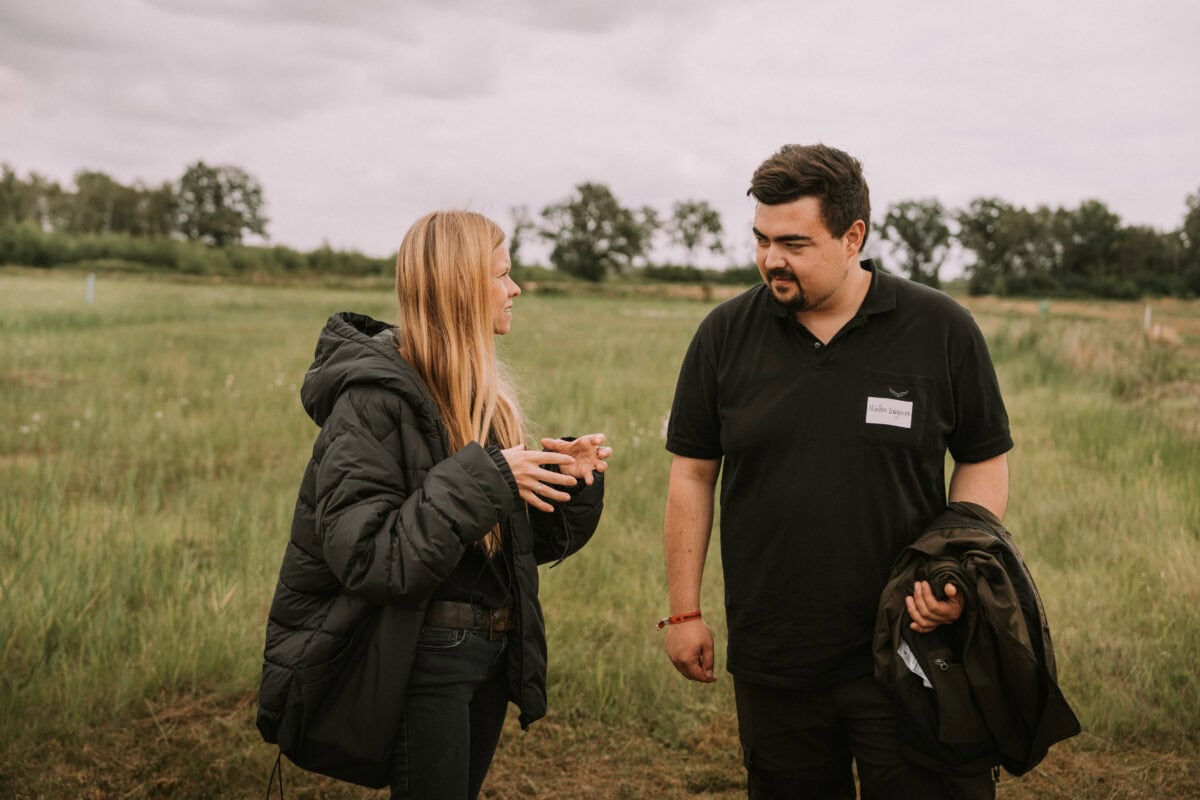
Out in the field, we showed Britta Haßelmann, chair of the Green Party’s Bundestag caucus, and her colleague Niklas Wagener exactly that. We examined the peat mosses up close, squeezed them together, and marveled once again at what incredible superheroes these plants actually are. We explained how they’re grown, how they’re harvested, and why this wet cultivation method is a crucial part of the solution.
The visit also had a very specific political context. The members of parliament intend to introduce a new resolution in the Bundestag. The document bears the apt title “Strengthening Water Retention and Resilience—Creating Income Opportunities for Farmers and Accelerating Peatland Conservation Procedures.” It clearly states that water retention in the landscape is an absolute prerequisite for agriculture and forestry. After all, peatland farmers no longer have too much water—instead, they increasingly have far too little! Sustainable agriculture cannot function under these conditions.
The proposal’s ambitious goal: By 2045, 50,000 hectares of peatland are to be rewetted and managed as wetlands each year. Since corn, grains, or potatoes can no longer be grown on these wet areas, this is precisely where paludiculture comes into focus—the biomass from which can later be used to make, for example, peat-free potting soil, packaging material, or even insulation. And what’s even better: Take a look at my jacket—this is paludiculture in action! Instead of down feathers, it’s filled with cattails! It really doesn’t get any more innovative than this. We love stuff like this!
To support farms through this major transition and give them planning certainty, the motion calls for, among other things, substantial support for agriculture: a rewetting subsidy and targeted economic assistance to develop new markets for these Paludi products.
Everyone at one table
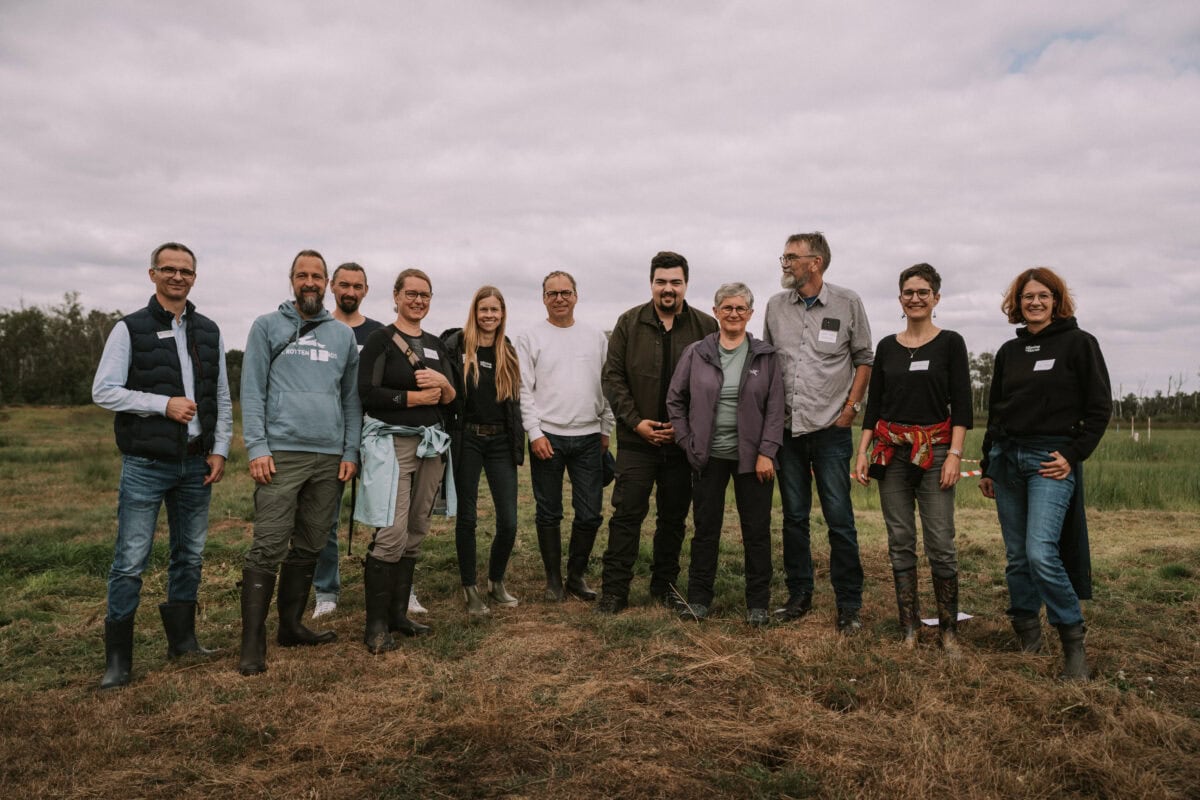
After all that input in the field and a light snack, we got down to business. We sat together in a large, diverse, and incredibly warm group with various stakeholders from agriculture, peat extraction, and academia. We had an in-depth discussion about how we can now put peatland rewetting into practice in the field and what specific policy measures are still needed to make that happen.
It was an incredibly productive day. A huge thank you goes to Greta Gaudig and Matthias Krebs from the Greifswald Moor Centrum, who took us on a fantastic guided tour of the site, and to Laura Herzog from the University of Osnabrück, who so wonderfully structured and led our discussion session afterward. You all helped make this day a complete success, filled with new ideas and lots of fun!
When science, practice, and politics come together on equal footing in the moor, real progress is made. Let’s shape change together!